
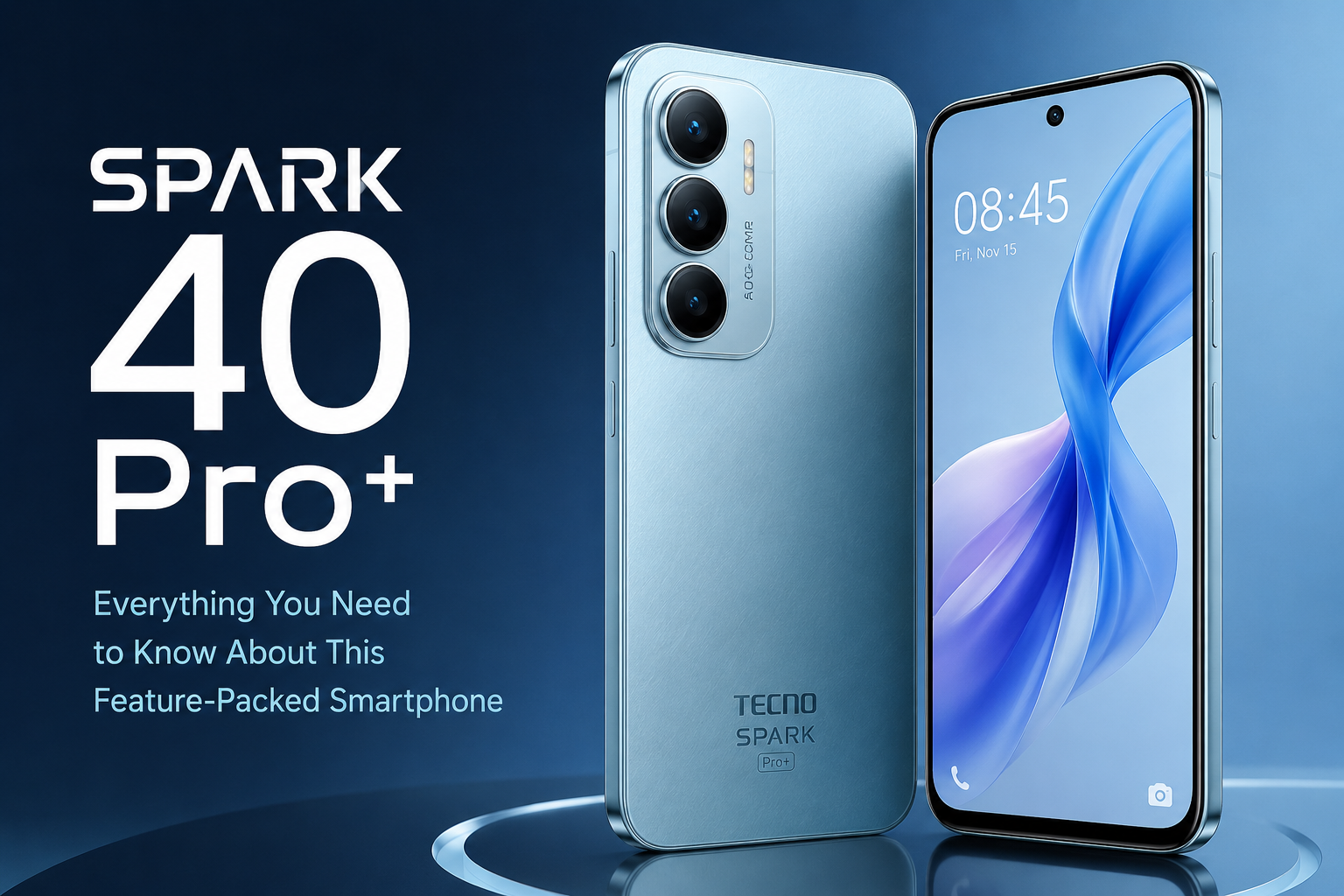
The smartphone market moves quickly. Every year brings new devices with brighter displays, faster processors, improved cameras, larger batteries, and smarter software. For everyday buyers, however, the biggest challenge is often much simpler: which phone actually offers a good balance of features and value?
The Spark 40 Pro Plus enters this highly competitive space with the goal of appealing to users who want a modern smartphone experience without necessarily stepping into the premium flagship category. From design and display quality to performance, photography, battery life, and everyday usability, there are many factors worth considering before making a purchase.
A smartphone is no longer just a device for making calls. It is your camera, entertainment screen, navigation tool, social media hub, wallet, and sometimes even your office. Think of it like a small digital backpack—you carry it everywhere, so the right combination of features can make a noticeable difference in daily life.
This article takes a detailed look at what potential buyers should know, the features that matter most, and whether this device could be a suitable choice for different types of users.
1. Design and Build Quality: A Closer Look at Style and Comfort
The first thing most people notice about a smartphone is its appearance. Before checking processor benchmarks or camera specifications, buyers usually hold the device, look at the screen, and decide whether it feels comfortable.
A modern and practical design
A good mid-range smartphone should feel stylish without sacrificing usability. Slim profiles, curved edges, comfortable button placement, and a balanced weight can make a major difference during everyday use.
The overall design approach is likely to focus on providing a premium-looking experience while remaining practical enough for regular use. A phone can have excellent internal hardware, but if it feels uncomfortable in the hand, the experience can quickly become frustrating.
The rear panel design also plays an important role. Camera modules have become a major part of smartphone styling, and manufacturers now use them to create a recognizable appearance.
Comfort during daily use
For many users, one-handed operation matters. Large displays are useful for watching videos and gaming, but they can make a device harder to manage.
The ideal balance comes from combining a large viewing area with slim bezels and an ergonomic frame. This allows users to enjoy more screen space without making the phone feel unnecessarily bulky.
Build quality is also important. Buttons should feel responsive, the frame should feel solid, and the device should be comfortable enough to use throughout the day.
2. Display Experience: More Than Just Screen Size
The display is one of the most frequently used parts of any smartphone. Whether you are reading messages, scrolling through social media, watching movies, or playing games, you are constantly interacting with the screen.
Large screen for entertainment
A spacious display can make everyday activities more enjoyable. Videos feel more immersive, websites are easier to read, and games have more room for controls and visuals.
For users who spend several hours each day on their phones, display quality should be a serious consideration. Resolution, brightness, color reproduction, and refresh rate all contribute to the overall experience.
Smooth scrolling and animations
A higher refresh rate can make scrolling, animations, and supported applications appear smoother. This may not completely change the way you use a phone, but once you become accustomed to a fluid display, returning to a basic screen can feel noticeably different.
Picture yourself effortlessly turning through the pages of a book. A standard display may feel like turning one page at a time, while a smoother screen feels more like gliding effortlessly through the pages.
This type of improvement can be especially useful for social media users, gamers, and anyone who spends significant time navigating apps.
Brightness for outdoor use
Screen brightness becomes particularly important when using a phone outside. A display that looks excellent indoors may become difficult to see under direct sunlight.
A strong viewing experience should offer good visibility in different environments, including bright outdoor conditions and dim rooms.
3. Performance and Processing Power
Performance is one of the biggest questions people ask before buying a new smartphone. Nobody wants to spend money on a device that starts slowing down after a few months.
Everyday speed
For general users, raw benchmark numbers are not always the most important factor. What matters more is how quickly applications open, how smoothly the interface responds, and whether multitasking feels comfortable.
A capable processor combined with sufficient memory can help the device handle common activities such as:
- Web browsing
- Social media
- Video streaming
- Messaging
- Online shopping
- Navigation
- Casual gaming
- Photography
The goal is not necessarily to compete with the most expensive flagship phones. Instead, the focus should be on delivering reliable performance for the activities most people perform every day.
Multitasking capabilities
Modern users rarely use just one application at a time. You might be watching a video, replying to messages, checking email, and browsing the internet within a few minutes.
Good memory management can help applications remain available in the background rather than constantly reloading. This creates a smoother experience and saves time.
For students and professionals, multitasking performance can be especially valuable when switching between productivity apps, browsers, communication platforms, and documents.
Gaming performance
Mobile gaming continues to grow. While not every buyer needs console-level graphics, many people enjoy popular racing, action, sports, and multiplayer games.
Gaming performance depends on several factors, including:
- Processor capability
- Graphics performance
- Memory
- Software optimization
- Thermal management
- Display responsiveness
A well-balanced device can provide enjoyable gaming without requiring users to purchase an expensive flagship.
However, buyers who regularly play demanding games at the highest graphics settings may still want to compare performance carefully with more powerful alternatives.
4. Camera System: Capturing Everyday Moments
The camera has become one of the most important reasons people upgrade their phones.
Years ago, smartphone cameras were mainly used for quick snapshots. Today, they are used for family photos, travel photography, social media content, video recording, online meetings, and even small business marketing.
Main camera performance
A high megapixel number may sound impressive, but it does not automatically guarantee better photos. Image processing, sensor quality, lens performance, and software optimization can all influence the final result.
A good camera should be able to capture:
- Clear daytime photographs
- Natural colors
- Detailed portraits
- Landscapes
- Close-up subjects
- Social media-ready images
For most people, consistency is more useful than impressive specifications on paper. You want a camera that can quickly capture a moment without requiring professional photography knowledge.
Low-light photography
Night photography is usually more challenging. When lighting decreases, the camera must work harder to preserve detail while controlling image noise.
Software-based night modes and improved image processing can help brighten scenes and improve visibility.
Still, buyers should maintain realistic expectations. A mid-range device may offer useful low-light capabilities, but it may not perform exactly like a premium camera-focused flagship.
Front camera and video calls
The front camera is important for more than selfies. It is frequently used for video calls, online classes, virtual meetings, and content creation.
A good front-facing camera should provide clear facial detail and balanced exposure. This becomes especially important when users are working remotely or communicating with family members through video platforms.
5. Battery Life: Can It Last Through the Day?
Battery life remains one of the most important practical features of any smartphone.
You can have an excellent camera and a beautiful display, but neither matters much if the phone constantly needs to be connected to a charger.
Daily endurance
Battery performance depends heavily on how you use the device. Streaming high-resolution videos, playing games, using mobile data, and keeping brightness high will consume more power.
Meanwhile, lighter activities such as messaging and occasional browsing generally place less pressure on the battery.
A modern device should ideally provide enough endurance to comfortably support a typical day of use.
Charging convenience
Fast charging can be particularly useful for people with busy schedules. Instead of leaving the phone connected for several hours, faster charging technology can provide a useful amount of power in a shorter period.
This is especially helpful when you realize your battery is low shortly before leaving home.
However, charging speed is only part of the equation. Long-term battery health and thermal management are also important.
Power management
Efficient software can play a major role in battery performance. Background applications, display settings, network activity, and system optimization all affect how quickly power is consumed.
This is why two phones with similar battery capacities can sometimes deliver very different results.
6. Software and User Experience
Hardware is only half of the smartphone experience. The software determines how you interact with that hardware every day.
A simple and accessible interface
For the general public, complicated software is rarely a selling point. Most users want an interface that is easy to understand.
The experience should make it simple to:
- Access applications
- Adjust settings
- Manage notifications
- Organize photos
- Control privacy options
- Customize the home screen
A clean interface can make even an affordable device feel more enjoyable.
Useful smart features
Modern smartphones increasingly include intelligent features designed to simplify everyday tasks.
These may include:
- AI-assisted photography
- Smart image editing
- Voice tools
- Translation support
- Battery optimization
- Personalized recommendations
- Security features
The most useful technology is often the technology you barely notice because it quietly makes things easier.
Software updates
Long-term software support is becoming increasingly important. Security updates help protect personal information, while operating system improvements can introduce new features and improve stability.
Before purchasing any smartphone, buyers should consider the manufacturer’s update policy and the expected software support period.
7. Storage and Memory Options
Storage may not seem exciting, but it can become a major problem when you start receiving notifications telling you that your phone is running out of space.
Why storage matters
Photos, videos, applications, downloads, and messaging attachments can quickly consume available storage.
Users who regularly record videos or download large files should consider choosing a model with sufficient internal space.
It is generally better to think about future needs rather than only current requirements.
A person who currently uses 60GB of storage may easily require much more space after a year of taking photos and installing additional applications.
Memory for smoother performance
RAM helps a smartphone manage multiple applications.
More memory can improve multitasking and reduce the need for applications to reload when switching between tasks.
For casual users, moderate memory may be sufficient. However, heavy users who frequently run multiple apps, games, and browsers may benefit from higher memory configurations.
8. Connectivity and Everyday Features
A smartphone should work well wherever you need it.
Mobile networks and wireless connectivity
Reliable connectivity is essential for browsing, streaming, messaging, and online services.
Depending on the market and available configuration, buyers should check support for the mobile network technologies they use most frequently.
Other useful features may include:
- Wi-Fi connectivity
- Bluetooth support
- GPS navigation
- NFC, where available
- USB connectivity
- Dual SIM capability
Dual SIM support can be especially useful for people who maintain separate personal and work numbers or travel between regions.
Security and privacy
Personal smartphones store a surprising amount of private information.
They may contain:
- Banking applications
- Personal photographs
- Passwords
- Emails
- Work documents
- Location information
For this reason, convenient security options such as fingerprint recognition or facial unlocking can be valuable.
The best security system is one that protects your information without making your phone difficult to use.
9. Who Should Consider Buying the Spark 40 Pro Plus?
Not every smartphone is designed for the same type of buyer.
The ideal customer is likely to be someone looking for a balance between modern features and affordability.
Students
Students often need a versatile device for research, communication, online classes, entertainment, and photography.
A large display, good battery life, sufficient storage, and dependable multitasking can make a smartphone much more useful during daily academic life.
Social media users
People who spend significant time on platforms such as video-sharing and social networking apps may appreciate a smooth display, capable cameras, and reliable battery performance.
For content creators, camera features and editing tools can also be important.
Everyday users
Many people simply want a dependable phone that handles daily tasks without unnecessary complications.
For these buyers, the most important qualities are often:
- Good battery life
- Comfortable design
- Smooth performance
- Clear display
- Reliable cameras
- Enough storage
In many cases, balance matters more than having the highest specification in a single category.
10. Potential Strengths and Things to Consider
Every smartphone has advantages and limitations.
Understanding both sides can help buyers make a smarter decision.
Possible strengths
The device may appeal to buyers looking for a modern combination of design, display quality, battery capacity, camera features, and everyday performance.
The strongest selling points for this type of smartphone are likely to include a feature-rich experience without entering the price range of premium flagship models.
A good mid-range phone is similar to a reliable all-purpose car. It may not be the fastest vehicle on the road, but it can handle commuting, travel, shopping, and everyday responsibilities without requiring an enormous budget.
Things to consider before buying
Buyers should carefully check the exact version available in their market.
Important details may vary by region, including:
- Processor configuration
- Memory options
- Storage capacity
- Network support
- Charging accessories
- Software version
- Color options
- Price
It is also worth comparing the device with competing smartphones in the same price category.
A good purchase decision should consider your personal needs rather than simply choosing the phone with the longest specification sheet.
11. How It Compares With Other Mid-Range Smartphones
Competition in the mid-range market is intense.
Different brands may focus on different strengths. One phone may offer a better camera, while another provides stronger gaming performance or faster charging.
Display versus performance
Some buyers care more about watching videos and browsing social media. For them, display quality may be a priority.
Others may focus on gaming or heavy multitasking, making processor performance more important.
The best choice depends on how you use your phone.
Camera versus battery
Camera-focused users may prefer devices with stronger image processing, while frequent travelers may prioritize battery endurance.
There is rarely one perfect smartphone for everyone.
Instead, the smartest approach is to identify your top three priorities and compare devices based on those requirements.
For example:
- Battery life
- Camera quality
- Gaming performance
Once you know what matters most, the buying process becomes much easier.
12. Is the Spark 40 Pro Plus Worth Considering?
The final decision depends on pricing, regional availability, and the specific configuration being offered.
For someone upgrading from an older budget smartphone, a modern device in this category could provide noticeable improvements in display smoothness, camera quality, charging technology, software features, and overall performance.
Focus on real-world needs
Before buying, ask yourself a few simple questions:
- Do I need a powerful gaming phone?
- Is camera quality my highest priority?
- How much storage do I actually need?
- Do I need the battery to last all day?
- Will I use the phone mainly for work, study, or entertainment?
- How long do I plan to keep it?
Your answers can help determine whether this model fits your lifestyle.
The best smartphone is not always the most expensive one. It is the one that solves your daily problems without forcing you to pay for features you will never use.
Conclusion
The Spark 40 Pro Plus represents the type of smartphone that many modern buyers are looking for: a device designed to bring together style, entertainment, photography, performance, and battery life in one accessible package.
For the general public, the most important factors are rarely complicated technical numbers. What really matters is whether the phone feels fast, lasts long enough, takes satisfying photos, provides a comfortable display, and remains dependable throughout everyday use.
Before making a purchase, compare the exact specifications and price available in your region with competing models. Consider how you actually use your phone rather than chasing the biggest numbers on a specification sheet. If the overall package matches your needs and budget, it could be a strong option in the increasingly competitive smartphone market.
Frequently Asked Questions
1. Is the Spark 40 Pro Plus good for everyday use?
Yes, it is aimed at users who want a modern smartphone experience for activities such as social media, browsing, video streaming, messaging, photography, and general multitasking. The exact experience will depend on the configuration available in your region.
2. Is the Spark 40 Pro Plus suitable for gaming?
It should be suitable for casual and many mainstream mobile games, but performance in demanding titles can vary depending on the processor, graphics hardware, memory configuration, and game settings.
3. Does the Spark 40 Pro Plus have a good camera?
Camera quality depends on the complete camera system and software processing rather than megapixels alone. Buyers should check real-world camera samples and reviews of the exact model sold in their market.
4. How long can the Spark 40 Pro Plus battery last?
Battery life depends on screen brightness, network usage, gaming, video streaming, background applications, and other factors. Moderate users can generally expect better endurance than heavy gamers or frequent video streamers.
5. Should I buy the Spark 40 Pro Plus or another smartphone?
Compare the price, specifications, software support, camera performance, battery life, and your personal priorities. If its overall feature set offers the best balance for your needs and budget, it may be the right choice.