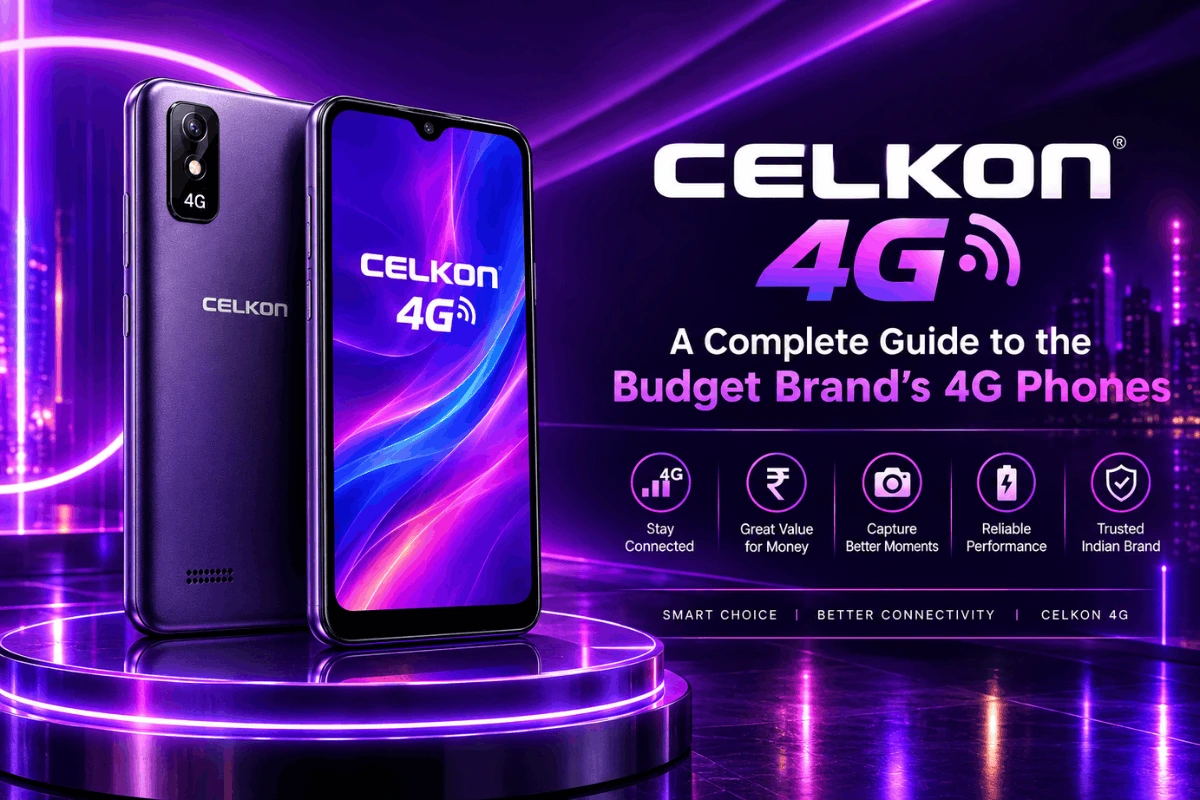
Remember when a “smartphone” cost less than a nice pair of shoes? Celkon built its whole reputation on that idea. The Hyderabad-based brand turned cheap, no-nonsense phones into a business model, and its Celkon 4G lineup was a big part of that story. This guide walks through what Celkon 4G phones actually offered, how they compare, and whether they still make sense today.
Who Is Celkon, Anyway?
Celkon is an Indian telecom and consumer electronics company founded in 2009 and headquartered in Hyderabad, Telangana, under chairman Y. Guru. The company built its early phones and tablets in Taiwan and China before setting up its own assembly lines, starting with a plant in Medchal, Hyderabad, followed by units in Tirupati and elsewhere in Telangana.
Celkon sold its smartphones under two sub-brands: CAMPUS for entry-level buyers and MILLENNIA for its higher-end range. At its peak, the company reported annual revenue north of ₹900 crore and ranked among India’s more recognizable domestic phone makers. Over time, though, tighter competition and limited investment in new technology slowed the brand down, a fate that hit almost every homegrown Indian phone maker once global giants entered the budget segment.
That backstory matters, because it explains why Celkon 4G devices exist in the first place: they were built to bring 4G connectivity to price-sensitive buyers just as India’s mobile data boom took off.
What Does “Celkon 4G” Actually Mean?
“Celkon 4G” isn’t one single phone. It’s a label the brand used across several models to signal 4G LTE support, back when many budget phones still shipped with 3G-only radios. So you’ll find the term attached to devices like the Celkon Smart 4G, the Celkon Star 4G+, the Celkon Diamond 4G Plus, and even a tablet, the Celkon Diamond 4G Tab 7.
Each model targeted the same core buyer: someone who wanted a functional Android phone, a dual-SIM slot, and 4G data, all without spending a lot of money. None of these devices tried to compete on cameras or gaming power. They competed on price, and mostly, they won that fight.
Take a closer look at the Celkon Smart 4G and see how its design, features, and 4G connectivity fit into the budget-phone era.
Core Features Across the Celkon 4G Range
A few things stayed consistent across nearly every Celkon 4G phone:
Dual SIM, single data plan. Most models supported dual SIM slots with VoLTE, so buyers could keep a work number and a personal number active while still getting 4G calling on at least one line.
Quad-core processors. The Celkon Smart 4G, for example, ran a quad-core 1.3 GHz ARM Cortex-A7 chip. It wasn’t fast, but it handled calls, messaging, and light browsing without much drama.
Modest cameras. Rear cameras typically sat between 3.2 MP and 8 MP, depending on the model. The Celkon Diamond 4G Plus stood out slightly with an 8 MP autofocus rear camera, a genuine step up for its price bracket.
Android, a version or two behind. These phones launched running Android 5.1 Lollipop or Android 6.0 Marshmallow, which was standard for the budget segment at the time.
Expandable storage. Internal storage usually topped out around 8 GB, but a microSD slot (often up to 32 GB) gave buyers room to breathe.
Here’s the funny part: none of this sounds impressive today, and it wasn’t meant to. These specs were the entire point. Celkon wasn’t trying to out-spec anyone; it was trying to out-price everyone.
Celkon 4G Phone Comparison Table
| Model | OS at Launch | Rear Camera | Battery | Approx. Launch Price (INR) |
|---|---|---|---|---|
| Celkon Smart 4G | Android 6.0 Marshmallow | 3.2 MP | 1,500 mAh | ~₹2,849 |
| Celkon Star 4G+ | Android 6.0 Marshmallow | 3.2 MP | Not officially listed | ~₹2,999 |
| Celkon Diamond 4G Plus | Android 5.1 Lollipop | 8 MP autofocus | Not officially listed | ~₹6,499 |
| Celkon Diamond 4G Tab 7 | Android 5.1 Lollipop | 3.2 MP with LED flash | Not officially listed | ~₹5,990 |
Prices and specs above come from device listing pages tracked by FoneArena and PhoneArena; treat them as historical reference points rather than current retail prices, since Celkon’s newer availability has narrowed considerably in recent years.
Battery Life: The Honest Story
Battery capacity is where Celkon 4G phones show their age most clearly. The Celkon Smart 4G shipped with a 1,500 mAh battery, which sounds tiny by 2026 standards, where even budget phones now ship with 5,000 mAh cells. But context matters here.
These phones ran small 4-inch to 5-inch displays, low-resolution screens, and low-power processors. A 1,500 mAh battery on a 4-inch display doesn’t behave like a 1,500 mAh battery on a 6.5-inch AMOLED screen. It stretched further because the whole phone sipped power instead of gulping it.
Realistically, buyers got a full day of moderate use (calls, texting, some browsing), but heavy video streaming or gaming would drain these phones fast. If you’re weighing an old Celkon 4G device today, plan on charging daily, and don’t expect multi-day battery life; that trend arrived years later with larger cells.
Connectivity and 4G Bands
Celkon 4G phones generally supported LTE bands 3 and 5, along with TDD band 40 and 3G bands 1 and 8, based on the Celkon Smart 4G’s published specification sheet. That combination covered a solid chunk of Indian telecom bands at the time, which is exactly why these phones worked reliably on networks like Airtel, Vodafone, and Idea (now Vi) back when they launched.
If you’re trying to use an old Celkon 4G phone in 2026, double-check band compatibility with your current carrier first. Networks have shifted spectrum allocations since these phones launched, and older LTE bands don’t always line up with what a carrier prioritizes today.
Should You Buy a Celkon 4G Phone Today?
Short answer: probably not as your main device, and here’s why, in plain terms.
Software support ended long ago. These phones ran Android 5 or 6, and Celkon never pushed years of security patches the way bigger brands do. Running an unpatched, decade-old Android build isn’t ideal for banking apps, everyday browsing, or anything involving sensitive data.
That said, a used Celkon 4G phone still has legitimate uses. It works fine as a secondary device for calls and texts, a backup phone for travel, or a simple device for a parent or grandparent who wants basic functionality without complexity. Buying one new, however, isn’t really an option anymore in most markets, since Celkon’s own retail presence has shrunk substantially.
If you genuinely need a modern budget 4G phone, brands like Samsung, Redmi, Realme, and Itel currently dominate that price bracket with far better cameras, batteries, and years of security updates. Celkon’s story is closer to history now than to product recommendation.
A Quick Word on Value-for-Money
To be fair to Celkon, the brand deserves credit for something: it helped normalize the idea that 4G shouldn’t be a luxury feature. When telecom operators in India pushed hard for 4G adoption, phones like the Celkon Smart 4G and Star 4G+ gave low-income buyers an actual, affordable way to get online. That mattered more than spec sheets ever could.
It’s a bit like a reliable old bicycle. Nobody’s bragging about it at a party, but it got a lot of people where they needed to go.
Final Thoughts
Celkon 4G phones represent a specific moment in Indian mobile history: the shift from 3G to 4G, told through the lens of a budget brand trying to make that transition affordable for everyone. The devices weren’t flashy, and they were never meant to be. They did one job: get people onto 4G networks cheaply, and for a while, they did it well.
If you’re researching Celkon 4G out of nostalgia, curiosity, or because you found one in a drawer, now you know exactly what you’re holding: a modest, dual-SIM, quad-core Android phone that was built for one purpose and did it without pretense.
FAQs
1. What is Celkon 4G?
Celkon 4G refers to a range of budget Android smartphones and one tablet from the Indian brand Celkon, all built with 4G LTE support. It’s not a single model but a feature label used across devices like the Celkon Smart 4G and Celkon Star 4G+.
2. Is Celkon still a functioning company?
Celkon was founded in 2009 as an Indian mobile manufacturer based in Hyderabad. According to available records, the company has largely stopped producing new dual-SIM, VoLTE, and LTE smartphones in recent years, following a slowdown tied to limited innovation and funding.
3. What Android version did Celkon 4G phones run?
Most models ran Android 5.1 Lollipop or Android 6.0 Marshmallow, depending on the specific device and launch year.
4. Do Celkon 4G phones support dual SIM?
Yes, the majority of Celkon 4G models, including the Celkon Smart 4G, supported dual SIM slots along with VoLTE for 4G voice calling.
5. Is it worth buying a Celkon 4G phone in 2026?
Not as a primary phone. Software support ended years ago, and newer budget brands offer far better batteries, cameras, and security updates at similar price points. A used Celkon 4G unit can still work as a basic secondary phone.
6. What was the battery capacity on most Celkon 4G phones?
The Celkon Smart 4G, for example, used a 1,500 mAh battery, which was fairly standard for small-screen budget phones during that generation.
Wrapping Up
Celkon 4G phones won’t win any spec-sheet contests in 2026, and that was never the goal. They filled a real gap at a real moment, giving budget-conscious buyers a simple way onto 4G networks. If you’re evaluating one today, whether out of curiosity or as a backup device, judge it by what it was built for: basic calling, texting, and light browsing, not by today’s flagship standards. For anything more demanding, a current-generation budget phone from an active brand will serve you far better.