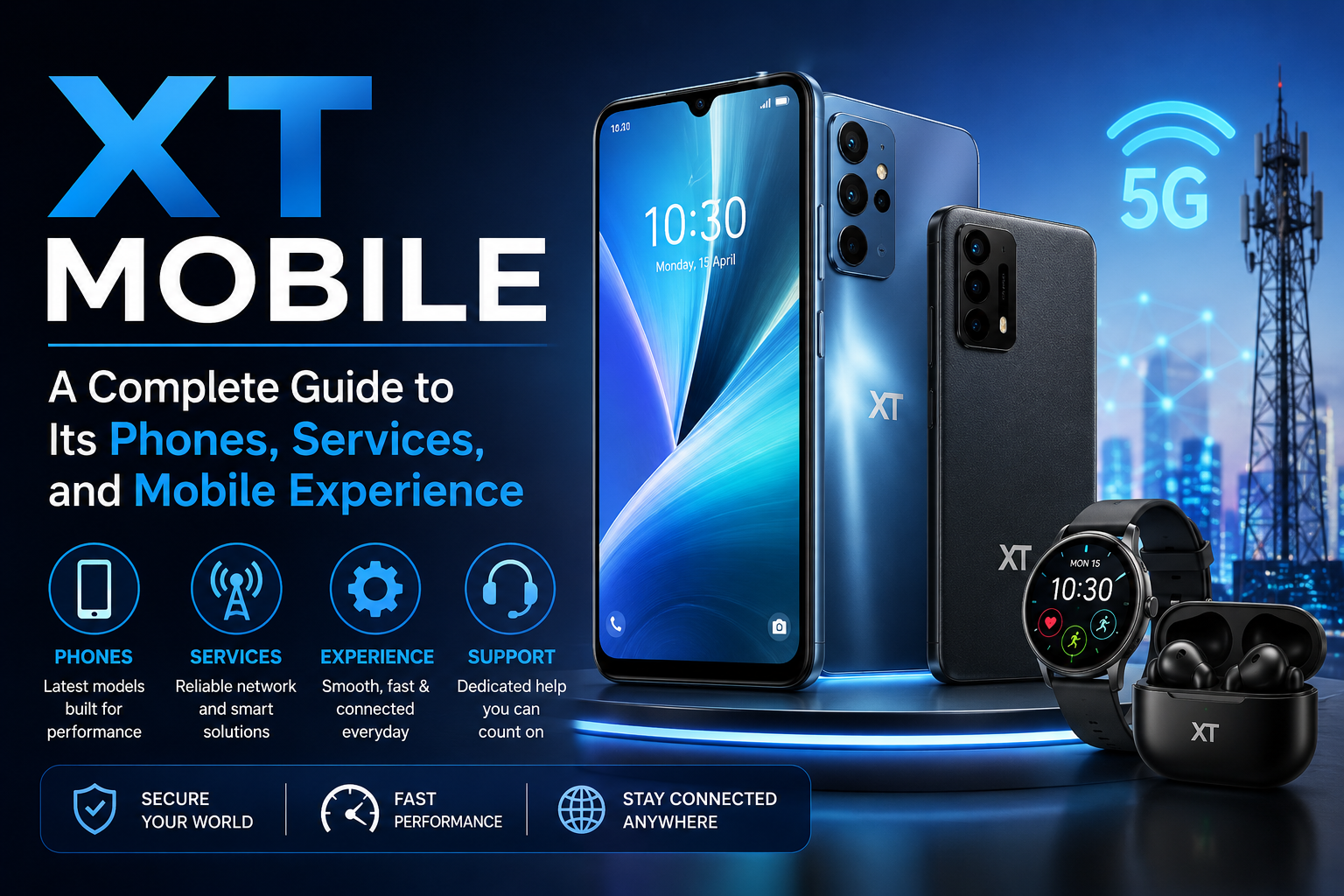
Mobile technology has become an indispensable part of modern everyday life. We use smartphones to communicate, work, study, shop, navigate, take photographs, and access entertainment. As the market continues to grow, many consumers are looking beyond the biggest smartphone brands and exploring alternative mobile companies, devices, and services.
The name XT Mobile can refer to different mobile-related brands and services depending on the market, so this article focuses on the broader idea of XT Mobile as a mobile technology and connectivity topic, including smartphones, network services, device features, performance, customer considerations, and the factors buyers should examine before choosing a mobile provider or handset.
1. Understanding the Meaning of XT Mobile
The term XT Mobile can refer to different products and mobile-related services rather than one universally recognized smartphone brand. Current search results, for example, include an XT Mobile workforce application as well as mobile and satellite products carrying the XT name. This makes it important for buyers and readers to identify the exact company, device, or service they are researching before making a decision.
For this article, XT Mobile is discussed in the broader context of modern mobile technology, including smartphones, connectivity, applications, performance, security, and the features people should consider when choosing a mobile device or service.
2. The Growing Importance of Mobile Technology
Mobile technology has changed the way we live.
Years ago, a phone was mainly used for calling and sending text messages. Today, one device can act as a camera, navigation system, entertainment center, wallet, office, and communication hub.
We use mobile devices to:
- Make calls and send messages
- Browse websites
- Watch videos
- Take photographs
- Attend online meetings
- Manage work
- Access social media
- Use banking applications
- Shop online
- Navigate unfamiliar places
This is why choosing the right mobile device or service has become more important than ever.
A phone is no longer just a phone. It is more like a digital backpack that carries many of the tools we need throughout the day.
3. Smartphones and the Modern User Experience
A good mobile experience depends on more than the name printed on the device.
When choosing a smartphone, people often look at the processor, camera, display, battery, and storage. These features are important, but the overall experience matters just as much.
Performance should feel smooth
Most users do not spend their day checking benchmark scores. They simply want their phone to respond quickly.
Applications should open without unnecessary delays. Switching between tasks should feel smooth, and everyday activities should not make the device feel slow.
A powerful processor can help, but software optimization is equally important.
A well-balanced phone is like a well-organized team. Every part needs to work together rather than relying on one powerful member to do all the work.
Storage also matters
Modern applications, photographs, videos, and downloaded files can quickly fill a device.
Before choosing a phone, think about how you use it.
If you frequently record videos, download games, or store large numbers of photographs, extra storage may be more useful than you initially expect.
Cloud storage can help, but having enough local space still makes everyday use more convenient.
4. Display Quality and Everyday Comfort
The display is one of the most frequently used parts of a smartphone.
You look at it while reading messages in the morning, checking information during the day, and watching content at night.
A good display should provide:
- Clear text
- Comfortable brightness
- Good color reproduction
- Strong outdoor visibility
- Smooth movement
- Reasonable power efficiency
Screen size is a personal decision
A large display is useful for watching videos, gaming, reading, and multitasking.
However, larger phones can also be harder to use with one hand and more difficult to carry comfortably.
Smaller devices are easier to handle but provide less space for content.
There is no perfect size for everyone.
The best display is the one that matches how you actually use your phone.
Refresh rate and smoothness
A higher refresh rate can make scrolling, animations, and other on-screen movements feel smoother and more responsive.
This may seem like a small improvement, but it can influence how polished a phone feels during everyday use.
Still, display quality should never be judged by one specification alone. Brightness, resolution, color accuracy, and efficiency all contribute to the final experience.
5. Camera Technology and Mobile Photography
The smartphone camera has become one of the main reasons people upgrade their devices.
For many users, the phone has completely replaced a separate digital camera for everyday photography.
Modern mobile cameras can be used for:
- Family photographs
- Travel pictures
- Social media content
- Product photography
- Video recording
- Online meetings
- Scanning documents
More megapixels do not always mean better photographs
A large megapixel number may sound impressive, but camera quality depends on much more.
The final image can be affected by:
- Sensor quality
- Lens design
- Image processing
- Lighting conditions
- Software optimization
- Stabilization
This is why two phones with similar camera specifications can produce noticeably different results.
Software has become increasingly important
Modern photography depends heavily on computational processing.
Software can help balance exposure, improve detail, reduce noise, and optimize colors.
In many cases, the phone does much of this work automatically.
That makes photography easier for ordinary users because you do not need to understand professional camera settings to capture a good image.
6. Battery Life and Charging
Battery life can have a major effect on your daily experience.
A phone with excellent performance is not very useful if you constantly need to search for a charger.
Battery endurance depends on several factors, including:
- Screen brightness
- Display technology
- Processor efficiency
- Mobile network conditions
- Background applications
- Gaming
- Camera use
- Battery health
Battery capacity is not the whole story
A larger battery capacity does not necessarily translate into longer real-world battery life.
A poorly optimized phone can consume power quickly, while an efficient device with a smaller battery may last surprisingly long.
Real-world performance matters more than a single number on a specification sheet.
Fast charging can improve convenience
Charging technology has also become an important feature.
Fast charging can reduce the amount of time you need to spend connected to a power outlet.
However, charging speed should be considered alongside battery longevity, heat management, and overall device quality.
7. Connectivity: Staying Connected Wherever You Go
A modern mobile device depends heavily on connectivity.
Fast hardware is less useful when the network connection is unreliable.
Users increasingly expect access to:
- 4G and 5G networks
- Wi-Fi
- Bluetooth
- GPS
- NFC
- Mobile hotspots
The importance of each feature depends on the individual.
Someone who works remotely may care deeply about mobile data performance. Another person may spend most of the day connected to home or office Wi-Fi.
Network compatibility is important
Before purchasing a phone, especially from a lesser-known or international manufacturer, check whether it supports the necessary network bands for your region.
This is particularly important when purchasing imported devices.
A phone may look excellent on paper but still provide a poor experience if it does not work properly with your local carrier.
8. Satellite and Specialized Mobile Connectivity
Not every mobile device is designed only for cities and traditional cellular networks.
Specialized products carrying the XT name have also been used in satellite communication. For example, the Thuraya XT was designed as a satellite handset for connectivity in areas where conventional mobile coverage may not be available. The product line emphasizes rugged construction, satellite communication, and features designed for remote environments.
Why specialized phones still matter
Imagine traveling through a remote desert, working offshore, or operating in an area with limited cellular coverage.
Your standard smartphone may become much less useful when there is no nearby mobile tower.
Satellite communication devices are designed for a different purpose.
They are not trying to replace every modern smartphone. Instead, they provide connectivity for specific situations where ordinary networks may not be available.
This shows how broad the mobile industry has become.
A phone can be designed for entertainment, photography, productivity, emergency communication, or extreme environments.
9. Mobile Applications and Productivity
The value of a mobile device is strongly connected to the applications it can run.
A smartphone without useful software would be like an empty office. The building may look impressive, but it needs tools and people to become useful.
Applications allow users to communicate, work, manage schedules, track tasks, and access information.
One example is the XT Mobile application from Synel Americas, which is designed to turn a smartphone into a mobile timekeeping and workforce-management tool. According to its Google Play listing, users can record work time, review schedules and timecards, request time off, and use location-related features depending on their organization’s setup.
This demonstrates how mobile technology is expanding beyond traditional communication.
Your phone can now become part of a larger workplace system.
10. Security and Privacy in Mobile Technology
As smartphones become more important, security becomes more important too.
Your device may contain:
- Passwords
- Personal photographs
- Private conversations
- Banking applications
- Work documents
- Email accounts
- Location information
Losing control of this information can create serious problems.
Basic security features
A modern mobile device should offer practical security tools such as:
- Screen locks
- PIN or password protection
- Fingerprint authentication
- Facial recognition where available
- Application permissions
- Encryption
- Regular security updates
Software updates matter
Security is not something that should be considered only when purchasing a phone.
A device needs continued support.
Regular updates can fix vulnerabilities, improve stability, and help maintain compatibility with modern applications.
This is especially important when considering smaller brands or niche devices.
Before purchasing, check the company’s software and security update policy.
A cheaper phone may not provide good long-term value if support ends quickly.
11. How to Choose the Right Mobile Device
With so many options available, choosing a phone can feel overwhelming.
The easiest solution is to start with your own needs rather than the most expensive device.
Ask yourself a few questions.
What do you use your phone for most?
If photography is your main priority, focus on camera performance.
If you play games, processing power and display quality may matter more.
If you work from your phone, battery life, multitasking, keyboard support, and connectivity could be essential.
If you mainly use messaging, social media, and web browsing, you may not need an expensive flagship device.
Set a realistic budget
The most expensive phone is not automatically the best option for you.
A mid-range device may provide everything you need at a lower cost.
Think about long-term value rather than simply looking at the initial price.
Check support and reliability
Before purchasing a lesser-known mobile product, investigate:
- Customer support
- Software updates
- Network compatibility
- Warranty availability
- Replacement parts
- User reviews
- Return policies
Doing a little research before purchasing can prevent a lot of frustration later.
12. The Future of XT Mobile and Smartphone Technology
The future of mobile technology will likely focus on making devices more intelligent, connected, and useful.
Artificial intelligence is already changing how people interact with smartphones.
AI can assist with:
- Photography
- Writing
- Translation
- Search
- Voice interaction
- Organization
- Image editing
At the same time, connectivity continues to develop.
5G networks, satellite communication, wearable devices, cloud services, and smart home technology are creating a more connected digital environment.
The smartphone may remain at the center of this ecosystem.
Think of it as the conductor of an orchestra.
Your watch, headphones, computer, smart home devices, car, and online services may all connect through the phone in different ways.
The future may therefore be less about creating completely new types of phones and more about making the devices we already carry smarter and better connected.
Conclusion
XT Mobile can refer to different mobile products and services, which is why identifying the exact device, company, or application is essential before making a purchase or comparison. Current examples include an XT-branded workforce application and specialized satellite communication products such as the Thuraya XT family.
More broadly, the mobile industry continues to evolve rapidly.
Modern users expect strong performance, reliable connectivity, capable cameras, long battery life, useful applications, and effective security. At the same time, specialized devices demonstrate that mobile technology is not limited to the traditional smartphone.
The right mobile device depends on your needs.
You do not always need the fastest processor, the largest display, or the most expensive camera. What matters is whether the device makes your everyday life easier.
Whether you are looking for a traditional smartphone, a productivity tool, or a specialized communication device, understanding your priorities is the first step toward making a smarter decision.
Frequently Asked Questions
1. What is XT Mobile?
XT Mobile can refer to different mobile-related products and services. For example, there is an XT Mobile workforce application, while the XT name has also appeared on specialized satellite communication products.
2. Is XT Mobile a smartphone brand?
The name is not associated with one single globally recognized smartphone manufacturer in the same way as major brands such as Samsung or Apple. It is important to identify the specific XT Mobile product or service you are researching.
3. What should I check before buying a mobile device?
You should consider performance, battery life, camera quality, display, storage, network compatibility, software support, warranty, and price.
4. Why are software updates important for mobile phones?
Software updates can improve security, fix problems, enhance performance, and maintain compatibility with newer applications and features.
5. What is the future of mobile technology?
The future is likely to involve greater use of artificial intelligence, faster connectivity, satellite communication, stronger integration with other devices, and more personalized software experiences.
